M. K. Theodoratus, Fantasy Writer, blogs about the books she reads--mostly fantasy and mystery authors whose books catch her eye and keep her interest. Nothing so formal as a book review, just chats about what she liked. Theodoratus also mutters about her own writing progress or ... lack of it.

.
Showing posts with label the Passive Guy. Show all posts

Monday, May 4, 2015

To Cozy or Not to Cozy -- Aaron Elkins "Dying on the Vine"

Dying on the Vine (Gideon Oliver Series #17)    Was reading a perfectly good cozy mystery--by a new author, to me, which I eventually finished with enjoyment. But...the family book exchange interrupted that read. A recent paperback by Aaron Elkins, Dying on the Vine, landed on my dining room table/desk. Of course, I had to take a peek.

   Now, I think of Elkins as a forensics mystery writer, featuring one of my favorite disciplines--physical anthropology. But that isn't what hooked me. The depiction of an old Italian man facing a difficult decision about his four sons' inheriting the family winery did. Yeah, Dying on the Vine began like most cozies--with a description of a bunch of interesting characters. Only Elkins doesn't use first person viewpoint. He uses third, and his stories are based on science.

   Elkins' sleuth, Gideon Oliver, the Skeleton Detective, doesn't appear until page 36 after the old man's body had been found along with the corpse of his missing wife. Voila! Two skeletons to puzzle over until the murder was solved with gobs of info on the tales a bunch of bones can tell. Plus the reader gets a nice tour of Florence, Italy and surroundings, especially the noshing possibilities.

   Then, for the heck of it, I did some research and discovered Elkins writes cozies, at least according to Wikipedia's definition: "Cozy mysteries, also referred to simply as cozies, are a subgenre of crime fiction in which sex and violence are downplayed or treated humorously, and the crime and detection take place in a small, socially intimate community." Nothing like having your preconceptions knocked upside-down.

   How can you have a mystery without some violence? After all, most mysteries solve a murder or a conspiracy that includes a lot of deaths. Cozies merely shoved the violence off-screen or ends right after the victim is confronted by the perp, and death might be inevitable. Yeah, there are exceptions, but the generalization holds from my reading.

   Same goes for sex among the long-marrieds. It probably happens, but it's off-scene. The fire of anticipation common in many kick-ass mysteries/fantasies is also missing. There's not even any hand-holding, that I remember.

   Almost as absent as sex was the growth in the main and secondary characters. In fact, this depiction of Lau, Oliver's sidekick, often fell into caricature. I felt his purpose was to make some dumb, somewhat funny, comment to reduce the tension rather than offer a new insight to solving the puzzle. Actually, there wasn't that much tension in the book, even at the end--no showdown with the perp or bringing the suspects into the drawing room to nail down the guilty.

All that said, I recommend the book. It's a relaxing, light, well-paced, well-plotted puzzle. Elkins' skills as a writer keep the storyline moving. And, you'll learn more about bones than you ever thought you wanted to. 

You can read a sample and more reviews of Dying on the Vine

~~#~~
Interesting Links on the Importance of Storylines

 The Passive Guy, one of my gurus, pointed me to an interesting article in the New Statesman about the importance of story, a commentary on a book by Agatha Christie. You might check it out, especially if reading means you like to immerse yourself in a book.

What kind of experience do you look for from your reading experience?
What annoys you?
Me? I hate to read in dibbles and dabs, but it seems to be what I'm doing lately.


~~#~~
Writing Accomplishments

   Think ignoring social media is paying off a bit. Got all the guest blogs and interviews done for a Blog Tour for The Ghostcrow. The e-story was published in March. What can I say but "I'm slow"?  I've gotten some nice reviews for my stories from other blog tours I tried. Hopefully, this one will provide the same. So far it's doing better than Doom Comes for a Sold Soul. Makes me wonder if longer stories get better reviews than short stories. Any one else have some experiences to share?

    More important, I got my revisions off to my critique group for On the Road. Not only am I transferring the already written story line to the new character, Pillar, but I'm seeing why the guys said it wasn't working. I've also shortened the chapters. Instead of running around 3000 words, they're coming in between 1500 and 2200 words.

   Translation: It means I'm avoiding one of my biggest complaints about reading late at night when I want to "read just one more chapter". I find myself reading for 45 minutes instead of 20. Grrrrrrrrrrr.

I may actually get back to Go Daddy and get my website mechanics fixed.
Wish me luck. You'll get a new snippet of my revisions of On the Road.

Monday, April 20, 2015

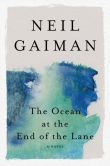
Do Cliches Matter if You Got Imagination? -- Review Neal Gaiman's The Ocean at the End of the Lane

The Ocean at the End of the Lane    Don't know what took me so long to read Neil Gaiman's heroic childhood fantasy The Ocean at the End of the Lane. Maybe I was afraid of having my mind blown by what Gaiman does with the cliche of the loner, bookish kid not liking the caregiver his working parents dump on him.

   Of course, Gaiman wrapped the plot in magic, including three powerful immortals who pretend to be human on the farm at the end of the land.  The heroic battle comes after the narrator becomes the means used by a malignant entity to invade our dimension.

   This is supposedly an adult novel, narrated by an adult who had just given an eulogy at a funeral and decides to kill some time between events by visiting some of his childhood haunts. In matter of fact prose, the unnamed main character tells his dark tale of heroic sacrifice. Yet, the whole story takes place during the narrator's childhood, when he was seven-eight years old.

   The beauty in the reading comes in Gaiman's writing. Yeah. The Gaiman gives the reader the realistic whimsey at the core of all his books. It continually amazed me with how he manages to get such preternatural suspense from such a mundane, suburban setting. Even so, the action doesn't seem to have had much effect on the character. You might even say the story lacks character development. The kid seemed much the same to me at the end as the two ladies who livied at the end of the lane.

   I felt the tale skimmed along the surface of some great thoughts. The story did become a lyrical poem to the wonders of childhood with all its mysteries and what ifs. The bottom line, I think, is that Neil Gaiman has written another modern fairytale in his spare style with depths buried in the action rather than the description.

   Writers can take lessons from how Gaiman creates his images without noticeable adjectives. His descriptions widen the possibilities in the reader's imagination. Most writers narrow down the possibilities within their story lines.

A delightful coming of age story, beautifully written, which will stick into the back of your mind and resurface at unexpected times. Gaiman's amazing imagination and story-telling make this a must read for fantasy readers. You can read more reviews and samples on
Amazon     &     B&N Nook

 ~~#~~
A Writer's Tool Kit & Interesting Links

   Came across a blog: Write Small: 5 Ways to Make Your Readers Care on Writer's Write by Mia Botha. One thing struck me was that people react to social crises much the same. They pick one cause or the problem of one person to work on. It's the details that matter.

   This pipsqueak writer is far too small to worry about Hugos or Nebulas, but it seems to me everyone should be aware of the current nomination process at the Hugos, a popularity contest which has always ignored some of the most enduring writers in the fantasy/science fiction genres. The Passive Guy, my favorite writing guru, posted this blog: Some Sad Puppy Data Analysis.

   Don't know how many of you read historical mysteries, but Jeri Westerson recently wrote a blog about how she came to write medieval mysteries: Writing Was My Secret. It made me wonder how many readers are secret writers. It's no secret that writers are readers.

~~#~~
    Did enjoy my sister-in-law and daughter's visit. She says she enjoyed it too--in spite of the cottonwoods doing their spring-thing. Barely managed to keep my emails cleaned. The break did energize my #writing. While my brain forgot about the plot of On the Run, the back stories and socio-magical-political structure fell into place. The action and time lines in the whole Andor series have become more coherent in my brain. Like Doom for a Sold Soul happens before the Celestial Wars. Surprising since I write by the seat of my pants. Maybe there's some scientific basis for automatic writing.

   Didn't get anything done on my website...though people seem to be visiting it before I get all the SEO done. Since I haven't gotten anything corrected for the public. Here's the first paragraph of the current version of On the Run, which happens after the Celestial Wars.

   The waitress chewed a wad of gum so large her white-coated tongue appeared each time her jaw moved. Pillar Beccon lowered her eyes at the sight. “I’d like extra cheese.”

   It does get a little more exciting when she and her friends encounter a stalker at the bus station.


Monday, March 30, 2015

Getting the Most out of Your Villains: Should They Be in a Readers Face?

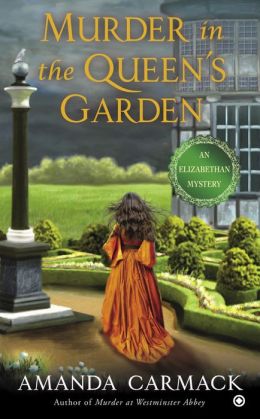
Murder in the Queen's Garden: An Elizabethan MysterySeems like it never takes me long to return to reading mysteries. This week in addition to some heavy non-fiction I read, Amanda Carmark's Murder in the Queen's Garden came to the top of my current to-read pile. Stickler's can argue that the Nonesuch's gardens belonged to Lord Arundel since he bought the estate from the crown after Catherine Howard's misadventures. But Elizabeth I had stopped at the fabled palace on progress, and I won't quibble.

   As usual, Carmark shines in her descriptions. She gives the reader a tangible idea about life in Tudor England, with all its squalor, riches, and superstitions, though you must give the Tudors credit for not going hysterical over witches like the Stuarts did. 

   What I find amazing is how Carmark narrows in on the telling detail. Just one example: Kate, the MC, being thankful her room wasn't close to the "jakes", aka outhouses, in a clause. London smells got more attention. The pacing, character development, plot line all live up to the standards of the setting.

    That leaves us with the crucial part of any mystery--the villain or perp. I thought her handling of that element lacking. I like the perp to be noticeably involved in the action. Being shoved from behind doesn't cut. The villain's dupe was a sniveling wretch, and the true perpetrator wasn't on scene enough to get a feel for the scheming going on in the shadows. Oh, there were encounters but no indications. Maybe a more astute readers would disagree.

   Perhaps the best part of this series is the growth in the main character's personal and political savvy. Kate Haywood has always been observant, but now she's beginning to make sense of the tortuous schemes of Elizabeth I's court. 

I especially like the concise descriptive points that Carmark uses to advance her story and create the ambiance in which her character interact. Strongly recommended, both as an enjoyable read and a craft lesson.

~~#~~ 

Links to Interesting Stuff.
At least, it's interesting to me.

   Are you dreaming of writing a blockbuster book? Hey, even if you're a reader, you might be interested in this blog that tells you how it's done: How to Write a Dystopian YA Novel in 10 Easy Steps  by Kat Brown. I found this interesting not so much because I expect any of my shorts to be blockbusters, but I seem to be stuck on writing YA coming of age stuff at the moment.

   Seems more people than me are thinking YA. The Passive Guy weighed in on why YA novels are used in so many blockbuster movies.

   Then, there's our own dystopian society. Once the US was exceptional, but Robert D. Putnam has written a book, Our Kids: The American Dream in Crisis, showing how the American Dream is about to evaporate. This is a book not only for the American body politic but for writers who need to get more class differences in their writing to make it more realistic. Won't preach, but I'm grateful that a poorer US [in the 1940s & 1050s] managed to support a more helping social infrastructure that allowed the poor to become upper middle class. Anyone for $99 a semester state university tuition, maybe about $2000 a semester in today's money.

   [Yeah, I was one of those kids who went to such a college, only we were so poor we qualified for a free tuition grant funded by the state. Thousands of poor kids got them at the time. But then, I could provide food & rent working for a buck an hour. Yeah, I'm thankful I grew up in the golden age of America.] 

~~#~~

   Was feeling a little sorry for myself  last week when I realized none of the stuff I've been writing the last month or so--trying to bend Cassy Mae's story into a sequel--wasn't cutting the mustard. My critique group wrinkled their noses at how the back story clogged the story rather than illuminated it. Then, I tried their suggestions. Result: a bigger mess.

   Of course, my musician daughter said, "So, what. Salvage what you can and continue writing." Her attitude: It's what happens when you create. Yeah, I think it was good advice for anyone.

   Actually, I had already salvaged the plot line with a new main character and sent it to my critique group. If the first response to my new first chapter is any measure, I made the right move. It even starts off in a bus station, so I get to keep my cover. Pill's going to fit right into the 10,000+ words I've already written with very little revision. I like angry Pillar Beccon more than mild Cassy Mae. The book's still set in Andor, only being told from a developing witch's point of view.

   Now, I must post the new story line on my author website. I'm also offering longer excerpts of all my fantasy stories there on my publication pages.

   Do you think I'm strange that I like to have a potential cover of my book while I'm writing?


Monday, January 19, 2015

Chasing Fictional Witchy Versions of Salem -- Can Your Cozy Survive the Sacchrine Test?

It Takes a Witch (Wishcraft Mystery Series #1)   Think my brain got a little soft while doing the Christmas shopping--what little I did of it. I bought a several light cozy mysteries. It Takes a Witch by Heather Blake was one of them. Turned out it was fortuitous. When I was sick, I had something to keep me amused.

[My critical powers were intact because a couple of the books landed on the to-trade pile without a finish because of their saccharinity and general surfeit of cliches.]

  It Takes a Witch survived--in spite of its opening scene having the main character, a wish-granting witch, prancing around as a tulle- and-glitter-wearing tooth fairy. The appearance of a dead body, that of a mortal witch wanna-be, soon cured the cuteness. My reward was a delightful couple hours in The Enchanted Village where Darcy and her sister have moved to help their aunt with her business granting wishes to the people of Salem--mortal and crafters alike.

  So what's to like? First, is a take on witchcraft that limits practitioners to one skill or, maybe, two with one of them being dominant like handedness. When you add a bunch of other writing craft skills--well drawn secondary characters, a reasonable romance [yes, there are such in my opinion], a quick pace even though the scenes are well defined, and if that isn't enough, there's the chuckle-producing narrative. Yeah, this is an above ordinary paranormal with well defined rules for how magic works.

  Recommended if you like cozy mysteries. I may have to go looking for other books in the series even though I thought I satisfied my curiosity on how many takes writers can devise for Salem, MA"s witchy reputation.

~~#~~

  Some interesting views on book marketing appeared in some of the blogs I've scanned lately. Perhaps the most interesting is Jane Friedman's blog on How E-Books Have Changed the Print Marketplace. There's more info here that writers need to know than just publishing statistics.

  The article left me with a couple thoughts. No wonder The New York Times Book Review has eliminated their rankings of mass paperbacks. [Oh, yeah. This dinosaur still prefers to read them. They don't hurt my thumbs or my eyes.] The other thought is more disturbing. I'm writing in two of the genres that are decreasing the most.

  The Passive Guy has also added his two-cents to the Amazon debate with a blog on Is Amazon's Game Totalitarian? I really liked his balanced comments on Amazon's place in the publishing world. No, I don't think Amazon's the champion of the indie writer. But I do appreciate them for giving me the opportunity to self-publish. If they hadn't broken the market open, Smashwords and other outlets wouldn't exist, I don't think.

~~#~~

  Am struggling with scheduling writing time ... Oh, I write plenty, but adding worthwhile words to new stories or the revisions I need to do so isn't happening.

  One bright note, finally got a cover for The Ignoble Nobel Prize Winner I really like ... including a title change.  Now the story's Doom Comes for a Sold Soul. I also made a couple minor revisions and will soon raise the price to 99c [to cover all the expense of having covers redesigned]. It'll probably take a couple weeks for me to get all the changes in line.

  A heads up if you haven't downloaded it. It's still free. The story is much the same except for implying Highgrim wet his pants. But the price is going up to 99c so as the new formatting is done and uploaded.  You can go to my author website for the links to Amazon, B&N, etc.

 More editorial changes on my writing. Have a new cover for Night for the Gargoyles too.

Monday, April 14, 2014

Finding a Writing Guru -- A Necessity if You Want to be a Writing Success


Unfortunately, success all too often depends on marketing.

Yeah, all the marketing gurus, keep telling me I need to play in all sorts of social media puddles. But, keeping up with GoodReads, Goggle+, Facebook and other social media feels like the death of me. At the end of the day, I'm panting from scurrying around the web ... and still have a bunch of places I should post ... or something-or-other. I'm beginning to think marketing gurus don't have a life, or at least a creative writing life.

Does that sound anything like your marketing life?
If so, I sure hope you like promoting your books more than I do.

My biggest failure? Commenting on blogs. All too often it's one of the things that gets left undone ... though there are quite a few I check on regularly ... No, it's not rebellion on my part. It's just that it's usually late at night by the time I read them, and I'm thinking of the nice paper book that's laying by my nice comfortable chair. If I get downstairs soon enough, I might even get a purring cat on my lap.

Some Writing Gurus I read -- and listen to -- more than others.

The Passive Guy at The Passive Voice is my "main man." Recently, I read this little item that motivated me to post some blog links this blog around. Did you know that "Self-Publishing is Dumb?" So, says the Passive Guy. The discussion is more about literary vs genre fiction than self-publishing per se. -- My opinion: any publishing venture is dumb if the practitioner doesn't know what they're doing. Which is why writers should read blogs to learn from others' experiences.

I think I learn more from The Passive Guy than almost any other publishing guru. Maybe because he isn't pushing his own products as he doles out advice. He's got another blog about the importance of value in the publishing equation you might find interesting.

Other blogs can be just as interesting and helpful. At Leigh's Wordsmithery I found some interesting market information. One of which I plan to submit to since I had already started re-editing the piece before I read the blog.

Lastly, how about a bit of fun?

 Margo Berendsen posted some writerly pins about editing on a recent blog. I share !!illustrating the writer's condition on my Facebook author page, but I don't know how to transfer pins. [I've still tons to learn about playing on the computer.]
 

~~#~~

I'm still begging for reviews for The Ghost in the Closet. The book is free on Smashwords until May ... if you would be so kind. Hint. Hint.

And Ta-Dah!
A Cover Reveal for a Free Short Story that's in Process.
[No, it's not the one I'm thinking of submitting.]


I don't know if I'll be using this cover or one still in process. For free stories, I usually get two cheap covers and chose the one I like the best.

Sunday, May 5, 2013

Writers' Words, Writers' Worries -- 1

Okay, I know I hop around on the internet too much, but I come across so much interesting stuff. So, I'll share some of the comments I read and give links so I can pretend I'm not wasting my time.

I'll start with the saddest, a situation that all writer's face -- Quitting, via a The Passive Guy link. If I interpreted things right India Drummond describes what happened when she went looking for an author who disappeared from markets and social networking ... and her thoughts on the writer's situation. Maybe she even offers some support for writers who are thinking about quitting. 

Morgan Mandel says "editing is a real pain" in her blog on Sloppy Editing as she worries about the editing of Blessing or Curse, her five story romance/science fiction anthology. --  I can't agree with her more even though I just edit my own stuff ... over and over again. But then, I often think writings a pain ... but not writing is a greater one.

Then, Dean Wesley Smith made some comments on a blog which gladdened my heard: Killing the Sacred Cows of Publishing: Writing Fast. Summary. Everyone's different. Every project's different. Only he dishes up a lot of food for thought about the writing process while he discusses the myths writer's tell themselves. -- I'm a slow writer for a lot of reasons. I figure I've got to cut out the social networking and not play so much solitaire ... among other things. Editing as I go, on the other hand, helps.

===

This has been sitting in my computer a few days. No excuses really ... except maybe I've been playing too much spider solitaire. Seem to be suffering from writer's block plus distractions so I'm going to publish this and go downstairs and read Kay Hooper's Haven.

Tuesday, August 2, 2011

Romance Rising -- Above the Cliches

Kay's Book Review:
Discovered Lee Roland's book, Viper Moon, on the grocery store bookshelves, where I seem to be finding a lot of the books I read lately. The cover featured the standard sexy lady in tight leather pants ... eh ... with red hair even... eh ... but she had a red and black banded snake draped over her. Yeah, a paranormal romance tempted me, and I read it.

The front cover blurb read: Evil waits for the dark of the moon. I almost didn't buy the book because of it. What kind of smarmy evil lolly-gags around? True evil blind-sides you until you have to pull your arse out of the blood. -- Maybe: Evil gathers in the dark of the moon?  Maybe not.

Fortunately, the back cover blurb developed the primary story line: Cassandra Archer is the Earth Mother's Huntress who rescues children from an imprisoned evil entity fighting to break free of his confines. So the dark of the moon is meaningful because that's the thriller deadline. The book opens with MC running from monsters in the town's sewers, probably without leather pants. The beginning timeline: the full moon. Cass has about two weeks to find and rescue two children from being sacrificed.

One disappointment with the book.  I think it's a stand-alone which is too bad since Rowland developed some interesting twists on the concept of the Mother Goddess and her servants. Both Cass and the love interest are well-drawn, but don't quite rise above the paranormal hero cliche. But, the secondary characters, the setting of an urban world in decay, and the twisting villains shine. A lovely little adventure.

Grumbling About My Lessons:
Had coffee with a successful writer a couple days ago.  [Yeah, our town has bunches of them.]  Among the the things we discussed was editing.  He doesn't.  I do because I'm so dyslexic I don't know if what I'm reading is really what the print on the paper/screen says. From reading a bunch of free stories on Smashwords, I'm thinking more people than me need a good editor before they publish.

I can hear everyone groaning at the cost of self-publishing books.  Yeah, it can be expensive ... especially if you write loooong books. The Passive Guy gave a link to the price guide of the EFA, the Editorial Freelance Association. It'll give you an idea of what you'll need to pay a competent editor.

Most of my time recently is spent writing ... and asking for book reviews.  In the process, I've found a list of book reviewers that features mostly romance and sci fi/fantasy: Lauri Owens' Embers. Got Taking Vengeance in another queue to be reviews.  Took me some two days to work through the list. Guess marketing trumps networking time.

Oh, I should mention I've given up on downloads/readers? for Cavern Between Worlds.  After almost 250 downloads, I've started charging $0.99  for it. Yeah, it's up on Amazon as well as Smashwords.Yeah, the inevitable happened. The downloads stopped dead.

Last but not least.  Opened my personal email this morning ... and there was a review sitting it it.  Okay, the notice that a review of Taking Vengeance was posted. Richard Hays of Stuff I Wrote did a very kind review. He writes better poetry than my Bad Haiku.

Trivia:
I may be spending a lot of time in my computer chair, 
but Wiggles sees to it that I get 
my exercise.
He likes to be twirled in an office chair best and
meows loudly if I don't jump up and turn the other chair.